
DHT blockers and minoxidil are the two most widely used approaches to male hair loss. They work through completely different mechanisms — which means they suit different situations, produce different results, and carry different risks. Here's a direct comparison.
How Each One Works
DHT blockers target the root cause of male pattern baldness. Dihydrotestosterone (DHT), produced from testosterone by the enzyme 5-alpha-reductase, binds to androgen receptors in scalp follicles in genetically susceptible men and triggers miniaturization — the progressive shrinking of follicles that leads to hair loss. DHT blockers (pharmaceutical or natural) reduce DHT production or binding, slowing or halting this process.
Minoxidil bypasses the hormonal pathway entirely. It's a vasodilator that improves blood flow to follicles and extends the anagen (growth) phase of the hair cycle. It doesn't affect DHT levels — instead, it stimulates follicle activity independent of the androgenic mechanism. Think of DHT blockers as removing the problem; minoxidil as compensating for it.
Evidence Comparison
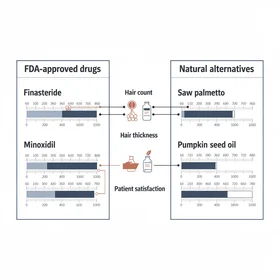
Both categories have clinical support, but at different levels of rigor:
- Pharmaceutical DHT blockers (finasteride/dutasteride): Highest evidence level. Multiple large RCTs. Finasteride reduces scalp DHT by ~60% and shows statistically significant regrowth in most men over 12–24 months.
- Topical minoxidil (5%): Also well-supported. Numerous RCTs over decades. ~60% of men see measurable improvement. Works best for vertex (crown) thinning.
- Natural DHT blockers (saw palmetto, beta-sitosterol, etc.): Smaller studies, less rigorous. Some compounds show meaningful results in targeted trials. Combination products with IRB-approved studies (like Procerin) have better evidence than single-ingredient supplements.
Who Each Suits
DHT blockers are the better fit if:
- You want to address the cause, not just the symptom
- You're comfortable with prescription medication (for finasteride)
- Your loss pattern is diffuse across the androgen-sensitive zones
- You prefer an oral regimen rather than daily topical application
Minoxidil is the better fit if:
- You want an established, non-hormonal option
- Your loss is concentrated at the crown or vertex
- You want to avoid any interaction with androgen levels
- You're at an earlier stage of loss with more active follicles to stimulate
Side Effects
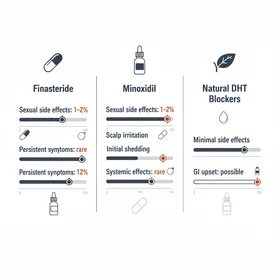
Finasteride carries a documented risk of sexual side effects (reduced libido, erectile dysfunction) in approximately 1–2% of users in clinical trials. A small subset of users report persistent effects after stopping. This is the most significant consideration for many men.
Natural DHT blockers have a much lower reported side effect rate. Saw palmetto and related compounds are generally well-tolerated. Mild GI effects are occasionally reported.
Minoxidil can cause scalp irritation, dryness, or itching in some users, particularly with the propylene glycol-based formulations. Oral minoxidil (prescription) can cause fluid retention and increased body hair growth.
What Happens When You Stop?
This is critical for both approaches: hair gained or preserved through either treatment is lost when you stop. Neither DHT blockers nor minoxidil permanently reprogram follicles — they manage an ongoing process. Long-term use is required to maintain results. Factor this into your decision about which approach to commit to.
Can You Use Both?
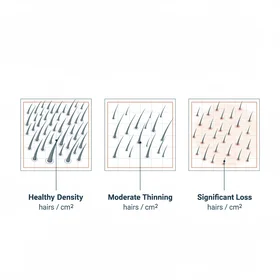
Yes — combining a DHT blocker with minoxidil is a common strategy. The two mechanisms are complementary: one addresses the androgen-driven cause, the other stimulates follicle activity directly. Many dermatologists recommend this combination for men with moderate-to-significant loss who want the best chance of results from non-surgical intervention.
Cost Over Time
Minoxidil generic is inexpensive — approximately $20–40/month for topical. Generic finasteride (often prescribed at 5mg cut into quarters) can be similarly affordable. Quality natural DHT blocking supplements typically run $40–70/month. Laser therapy devices have high upfront cost ($300–800) but no ongoing expense beyond electricity.
For an in-depth look at how DHT blockers specifically target the 5-alpha-reductase pathway, see the research coverage at DHT blocker deep dive.