
Natural DHT blockers are a legitimate category with real clinical data behind several compounds. They will not match finasteride on raw potency, but for men who want to address DHT-driven hair loss without prescription side effects, the evidence supports specific options. Here they are, ranked by the strength of published clinical research.
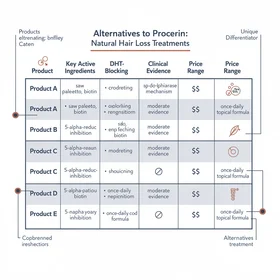
1. Combination Products (Procerin)
Combination formulas that stack multiple DHT-blocking compounds consistently outperform single ingredients in clinical settings. The logic is straightforward: hitting the 5-alpha-reductase pathway from multiple angles produces a greater cumulative effect than any single botanical alone.
Evidence: Procerin (saw palmetto + beta-sitosterol + pumpkin seed extract + zinc + B6, with topical activator) has an IRB-approved, double-blind, placebo-controlled study showing statistically significant improvement. This is the same standard of evidence applied to pharmaceutical trials. Few OTC supplements have this level of independent oversight.
Efficacy: Approximately 38% of users show measurable improvement. Best results in men under 40 at Norwood I-III.
Cost: ~$40-50/month for the combo system.
Best for: Men who want a comprehensive natural protocol in one system. Early-to-moderate stage loss. Side-effect-averse men who want clinical backing, not just ingredient-level claims.
Not ideal for: Men at Norwood V+ expecting significant regrowth. Anyone with rapidly progressing loss who needs maximum intervention immediately.
2. Pumpkin Seed Oil
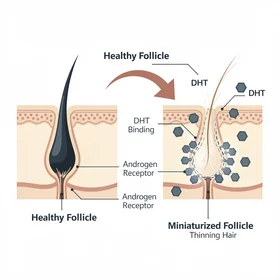
One of the cleanest single-compound data points in the natural DHT blocker space.
Evidence: A 2014 randomized, double-blind, placebo-controlled trial showed 40% increase in hair count at 400mg/day over 24 weeks versus placebo. Small study (n=76) but well-designed with proper controls.
Efficacy: 40% hair count increase in the treatment group. Zero adverse events reported.
Cost: ~$10-20/month as a standalone supplement.
Best for: Men who want a single, inexpensive natural compound with solid RCT evidence. Works well as an addition to a broader protocol.
Not ideal for: Standalone use in moderate-or-later stage loss. Better as part of a combination than as sole intervention.
3. Saw Palmetto (Serenoa repens)
The most widely studied natural 5-alpha-reductase inhibitor with decades of use data.
Evidence: Multiple clinical trials. A 2012 head-to-head with finasteride showed 38% of saw palmetto users improved versus 66% for finasteride. Less potent, but statistically significant improvement over baseline. A 2020 systematic review confirmed modest but real effects on hair count.
Efficacy: Approximately 38% improvement rate as monotherapy. Inhibits both Type 1 and Type 2 5-AR at lower potency than pharmaceuticals.
Cost: ~$10-15/month for quality standardized extract (320mg/day, 85-95% fatty acids).
Best for: Men who want the most-studied individual natural compound. Budget-conscious starting point. Prostate health co-benefit.
Not ideal for: Men expecting finasteride-level results from a single ingredient. Works better in combination.
4. Beta-Sitosterol
A plant sterol that works through a different mechanism than 5-AR inhibition, competing with DHT at the androgen receptor.
Evidence: The 2002 study in the Journal of Alternative and Complementary Medicine tested beta-sitosterol combined with saw palmetto and found significant improvement. Isolating beta-sitosterol's individual contribution is difficult since studies use combinations. Mechanistic data is solid (receptor competition), but standalone hair loss RCTs are limited.
Cost: ~$10-15/month.
Best for: Adding receptor-level competition to a protocol that already includes a 5-AR inhibitor. Complementary mechanism.
Not ideal for: Standalone use. The evidence is primarily in combination contexts.
5. Pygeum Africanum
Bark extract with documented 5-alpha-reductase inhibition in laboratory settings and a long history in prostate health.
Evidence: In vitro 5-AR inhibition demonstrated. Anti-inflammatory properties documented. However, direct clinical evidence for hair regrowth is limited to smaller studies and supporting data, not primary RCTs for androgenetic alopecia.
Cost: ~$8-12/month.
Best for: Supporting ingredient in a multi-compound stack. Men who also want prostate health support.
Not ideal for: Primary DHT-blocking intervention. Evidence is too thin for standalone confidence.
The Honest Limitations
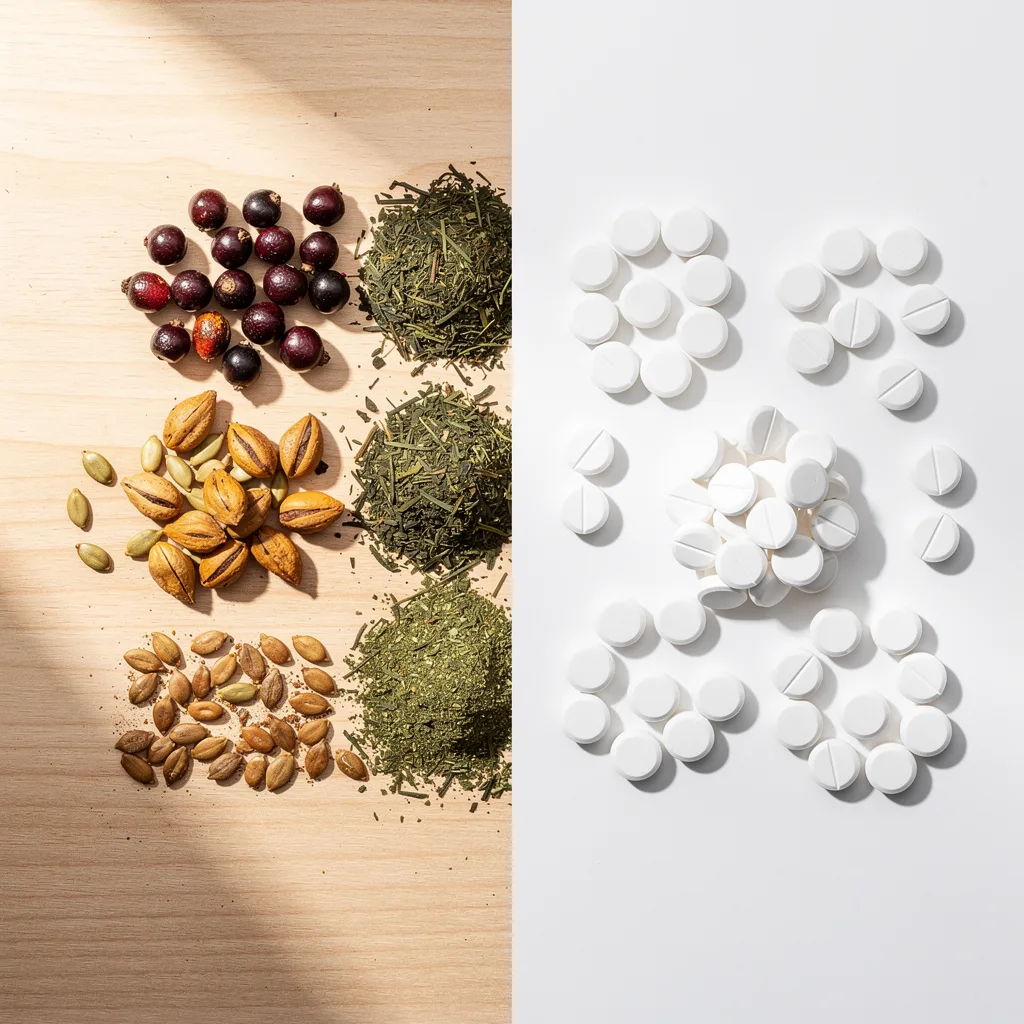
No natural DHT blocker matches finasteride's ~60% scalp DHT reduction. The clinical data is consistent: natural options produce moderate improvements (30-40% response rates as monotherapy) versus pharmaceutical options (83% for finasteride). That gap is real.
Natural DHT blockers work best when:
- Started early (Norwood I-III, before significant miniaturization)
- Used consistently for 6+ months (hair cycles are slow)
- Combined rather than used as single ingredients
- Paired with a topical component for follicle-level delivery
If you have been using natural options for 6+ months without sufficient results, that is the signal to discuss pharmaceutical options with a healthcare provider. For a full breakdown of what is available in the broader DHT blocker space, DHT blocking supplements explained covers every compound in detail. And for guidance on regrowth specifically, hair regrowth strategies covers realistic timelines and expectations.